

Difference Monsieur Cuisine Plus Et Connect
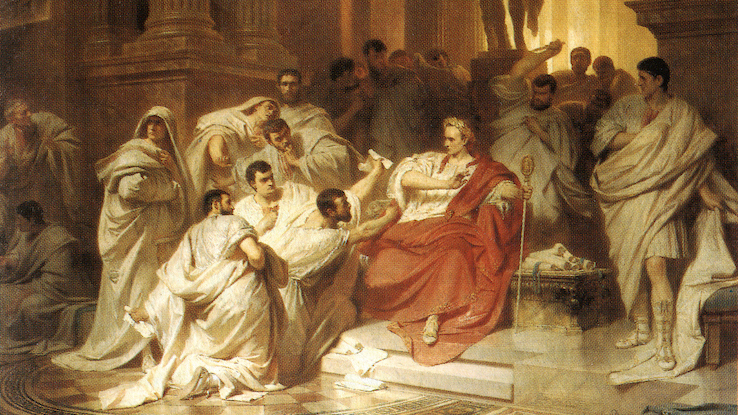
You might already know the tragic tale of Caesar, the famed Roman leader who was murdered by his friends and foes in the Senate — simply do you lot know the story behind his downfall? Caesar'south legacy is complicated, but his story has inspired novels, plays, films, idiot box shows and other cultural retellings worldwide. Still, the bodily narrative of Caesar's death — particularly the motivations and the aftermath — is often shaded below the circumstances of the murder. To marking the Ides of March, the date of Caesar'southward assassination, we're taking a wait into what led the Roman aristocracy to kill Caesar and how the aftermath resulted in the fall of the Roman Commonwealth.
How Caesar Reshaped Rome (for Better and Worse)
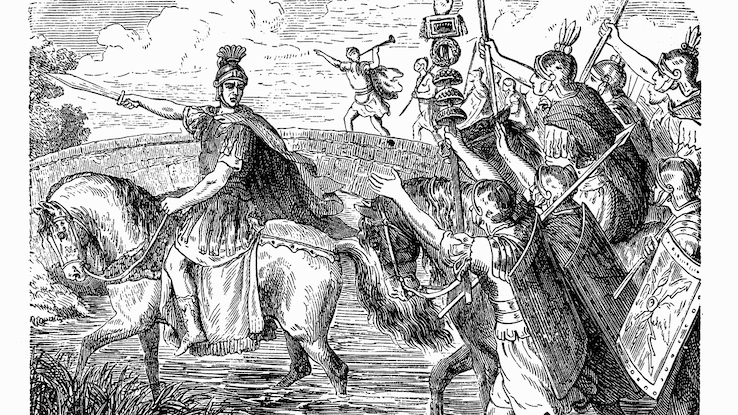
Caesar is one of the almost significant figures in Roman history, and for skillful reason. Throughout his life, he involved himself in the affairs of his people and state. Through charisma, wit and animal forcefulness, Caesar made his style to the top of the ranks in the Roman armed services, gaining fame for his conquest of the Gallic people and his epic rivalry with the fallen Roman leader Pompey.
Post-obit his military service, Caesar progressed quickly through the political chain. Information technology didn't take long for his wartime reputation to lend itself to an even more favorable political career. Between 69 B.C. and 59 B.C., he transitioned from a low-level quaestor, a type of public officer, to a consul, the highest-level official in Roman politics. At the elevation of his life — and not long before his death — he was the most powerful man in the Roman Republic.
On the surface, Caesar didn't seem to burn any bridges with the Roman public. As a politician, he spearheaded efforts to expand Rome, including ordering the reconstruction of Carthage and Corinth, two notable ancient cities destroyed in previous wars. He also worked to improve the lives of working class Romans, providing supplies, land, and debt and rent forgiveness and working to remedy the fiscal gap between the classes. For these efforts, Caesar was beloved among Rome'southward working-class citizens.
However, Caesar's epitome suffered from a lack of clarity effectually his intentions. Did he actually care about Rome, or simply his own ascension? To his swain elites, it seemed that he had begun to steer Rome across a republic and into a organization of imperialism. In the stop, he seemed intent on taking his place at the top of the government. And this didn't sit well with the Roman Senate.
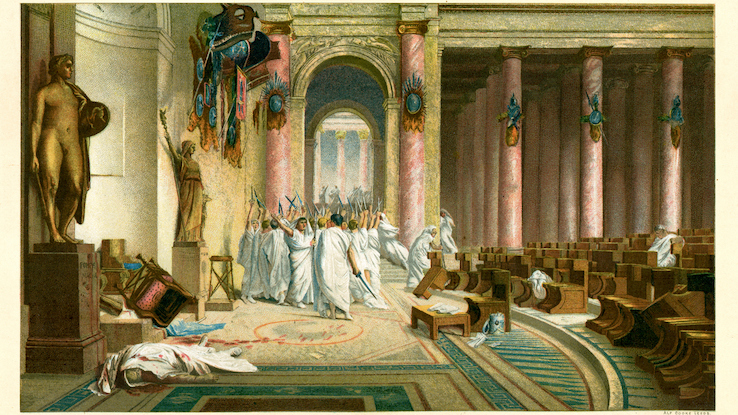
The motivations for Caesar's murder aren't entirely straightforward. Caesar'due south infamous role in Roman expansion meant that he had a complicated human relationship with the people of his government, some of whom looked upon him with admiration and others who felt angered by his perceived grabs for ability. However, he was likely killed for one primary reason: fear of dictatorship. Caesar'due south upward ascent to power didn't seem to have an endpoint. Politicians around him began to grow nervous that he might usurp their power and have over all of Rome. The one-time rulers of Rome, the Etruscan kings, had been power-hungry tyrants. Memories of their rule led to the distrust around Caesar'southward empowerment.
In 44 B.C., two Roman politicians named Cassius Longinus and Marcus Brutus (i of Caesar'due south closest friends) discussed ways to prevent Caesar from seizing power over the country. Worried that Caesar would push them into a tyrannical government, the two began to aggrandize their circumvolve of concern to include other politicians, Senators and nobles. Soon, many of Caesar'south colleagues were in on the plot to terminate Caesar's impending reign. Just how? Cassius and his conspirators saw the murder of Caesar as the only clear way to liberate themselves and the country from his imperialist ambitions.
How Did the Murder of Caesar Unfold?
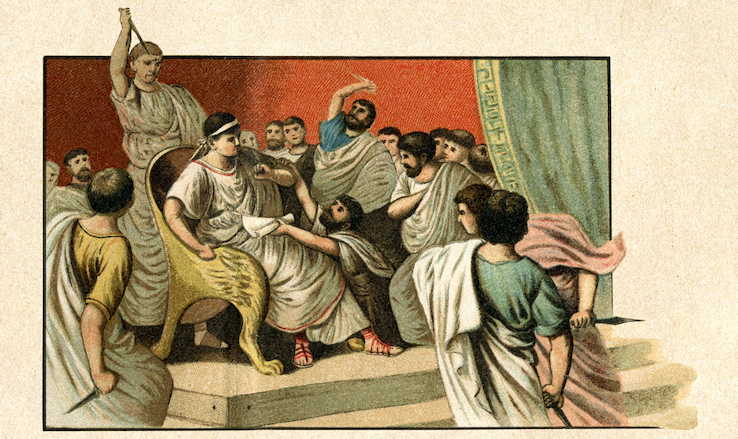
Unfortunately for Caesar, he was an like shooting fish in a barrel target for bump-off. He yearned to lead a semi-normal life and did not use bodyguards. The Senators intended to kill him on the Ides of March — March 15 in 44 B.C. — by drawing Caesar to the location of the Gladiator Games, the Theatre of Pompey, and stabbing him.
When Caesar didn't prove up to the faux event, they sent Brutus to retrieve him. Brutus had get Caesar's long-fourth dimension confidant later on Caesar pardoned him post-obit a battle. He had become like Caesar'southward own child, which meant that he had little trouble persuading Caesar to follow him. Caesar brought Mark Antony, a shut ally, along. The assassinators lured Antony away and left Caesar with no encompass. Once he was alone, someone grabbed Caesar'due south toga, swain Senators drew their blades and the attack began.
The assault lasted only minutes, but Caesar concluded up with virtually thirty wounds. He bled out and passed abroad on the theater floor. Historians speculate that his heartbreaking final words were "Et tu, Beast?" — pregnant "You too, Brutus?" — conveying the stupor Caesar felt that, even after pardoning Brutus, the man would participate in Caesar'south violent assassination. Even so, Brutus, forth with the balance of the Senators, felt justified in the attack, believing it would prevent the Roman regime from falling victim to tyranny. But how did the remainder of Rome feel when they found out about the bump-off?
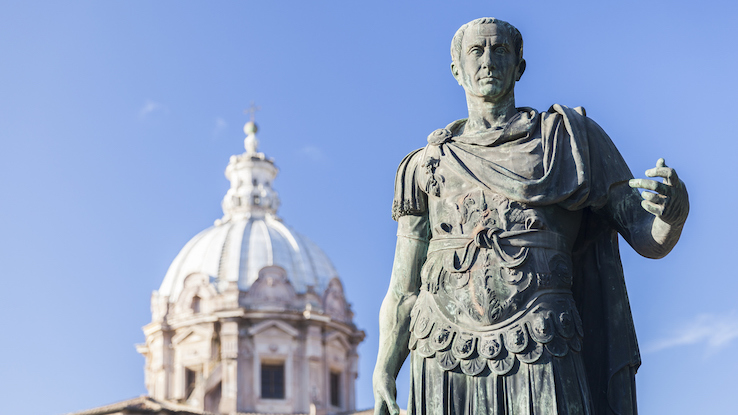
Caesar'due south death was not a finalizing effect. After Caesar was killed, the Senators sent Brutus to speak to the citizens and explain their intentions backside the murder. Brutus met with the Roman public and conveyed that, had they not killed Caesar, he may have taken over as King of Rome and threatened their liberties and rights.
While this seemed perfectly reasonable to the Roman elite, the mutual people of Rome were non satisfied with the reasoning. His murder echoed throughout the state, and the middle- and lower-class people of Rome were furious that the Senate had taken their leader's life. The assassination as well led to a serial of civil wars. The lower classes rose upwards against the aristocracy, with Marking Antony and his allies rallying against Cassius and Brutus' armies in Hellenic republic.
Meanwhile, Caesar's heir, an adopted yard-nephew named Octavian, found out virtually the expiry of Caesar while training at a armed services campsite. He came to Rome to inherit Caesar'southward fortune and plant himself swept into the unfolding battles for power and wealth that resulted in additional years of conflict. The wars between Cassius, Brutus, Antony and Octavian led to an ongoing loss of life and contributed to public unrest throughout an increasingly less manageable state.
Ultimately, information technology took another 17 years before the Roman Democracy ended and the Roman Empire developed. Octavian, renaming himself "Caesar Augustus," took his identify as the get-go Roman Emperor, spurring a new political horizon for Rome.


Difference Monsieur Cuisine Plus Et Connect,
Source: https://www.reference.com/history/julius-caesar-downfall-ides?utm_content=params%3Ao%3D740005%26ad%3DdirN%26qo%3DserpIndex&ueid=36bd28c8-5f81-4155-ae8c-1e2826d87ddc
Posted by: haaghictir.blogspot.com
0 Response to "Difference Monsieur Cuisine Plus Et Connect"
Post a Comment